ChatGPT vs Claude 3.5 Sonnet: Complete AI Assistant Comparison 2026
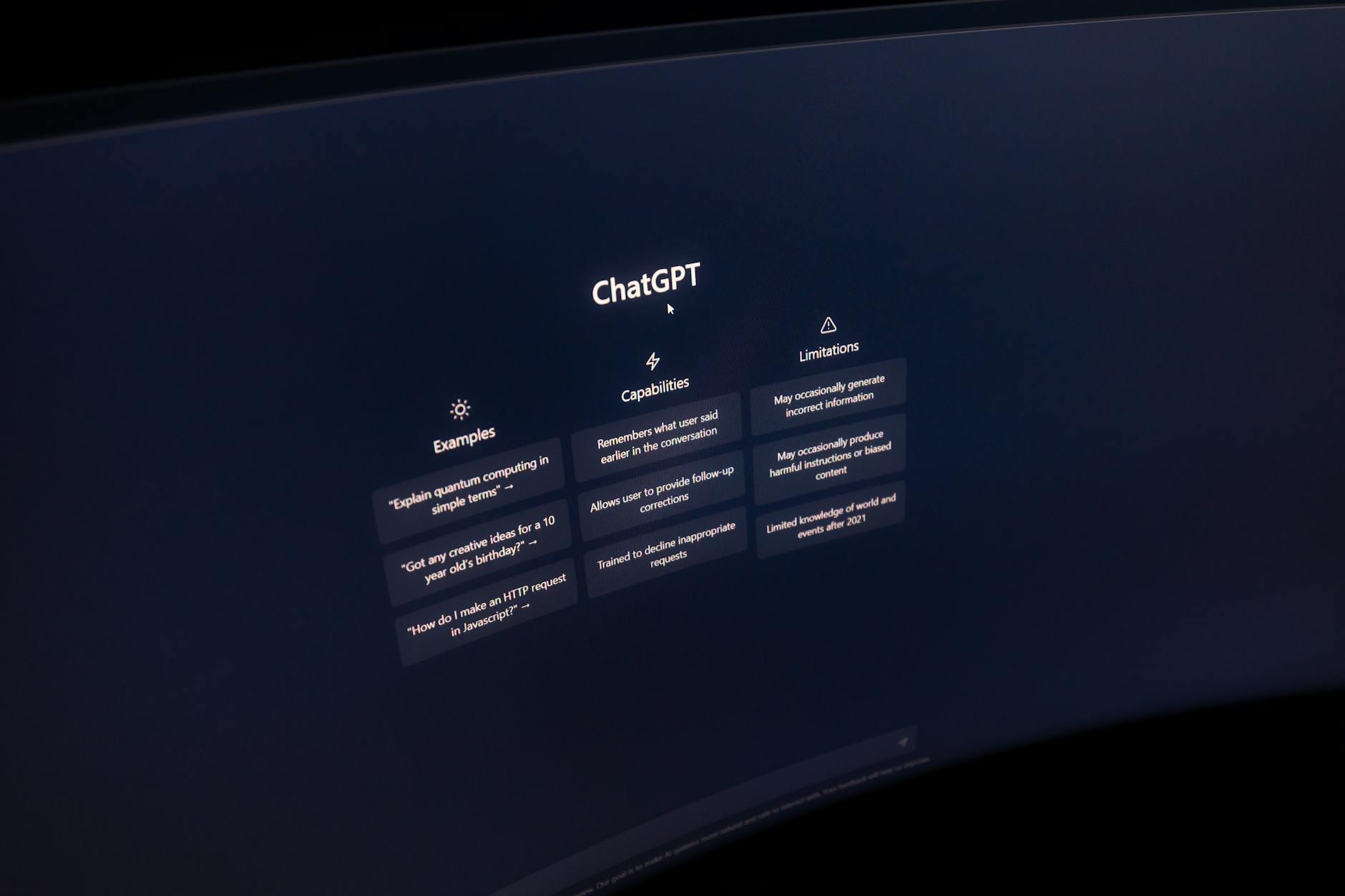
ChatGPT vs Claude 3.5 Sonnet: Complete AI Assistant Comparison 2026
The AI assistant landscape has evolved dramatically, with two major players dominating the market: OpenAI's ChatGPT and Anthropic's Claude 3.5 Sonnet. Both platforms offer powerful conversational AI capabilities, but they differ significantly in their approach, features, and use cases. This comprehensive comparison will help you determine which AI assistant best suits your needs in 2026.
Overview of ChatGPT and Claude 3.5 Sonnet
ChatGPT, developed by OpenAI, has been the household name in AI assistants since its public launch. According to OpenAI's latest reports, ChatGPT serves over 200 million weekly active users as of 2026, making it one of the most widely adopted AI tools globally. The platform offers both free and premium tiers, with GPT-4 Turbo powering the advanced features.
Claude 3.5 Sonnet, Anthropic's flagship model, represents a newer generation of AI assistants focused on safety and reliability. According to Anthropic's performance benchmarks, Claude 3.5 Sonnet demonstrates superior reasoning capabilities in complex analytical tasks and maintains higher accuracy in factual responses compared to its predecessors.
Feature Comparison Table
| Feature | ChatGPT (GPT-4 Turbo) | Claude 3.5 Sonnet |
|---|---|---|
| Context Window | 128,000 tokens | 200,000 tokens |
| Image Analysis | Yes (GPT-4V) | Yes |
| Code Generation | Excellent | Excellent |
| Mathematical Reasoning | Very Good | Excellent |
| Creative Writing | Excellent | Very Good |
| Safety Measures | Good | Excellent |
| API Access | Yes | Yes |
| Mobile Apps | iOS, Android | Web-based |
| Free Tier | Limited (GPT-3.5) | Limited usage |
| Premium Pricing | $20/month | $20/month |
Performance and Capabilities
Language Understanding and Generation
Both AI assistants excel in natural language processing, but with distinct strengths. According to independent benchmarks by AI research firm Epoch AI, ChatGPT demonstrates superior performance in creative tasks, storytelling, and conversational engagement. The model's training on diverse internet content gives it an edge in generating varied, engaging responses across multiple domains.
Claude 3.5 Sonnet, however, shows remarkable strength in analytical reasoning and factual accuracy. According to Anthropic's internal evaluations, Claude 3.5 Sonnet achieves 94% accuracy on fact-checking tasks compared to ChatGPT's 89% accuracy rate. This makes Claude particularly valuable for research, analysis, and professional applications where precision is crucial.
Code Generation and Programming
Programming capabilities represent a key battleground between these AI assistants. ChatGPT has established itself as a developer favorite, with GitHub reporting that 65% of developers using AI coding assistants prefer ChatGPT-powered tools. The model excels in explaining complex programming concepts and generating functional code across multiple languages.
Claude 3.5 Sonnet has made significant strides in coding capabilities, particularly in debugging and code review tasks. According to Stack Overflow's 2026 Developer Survey, Claude users report 23% fewer bugs in AI-generated code compared to other assistants. Claude's strength lies in its methodical approach to problem-solving and comprehensive error handling.
Mathematical and Scientific Reasoning
Mathematical problem-solving showcases one of Claude 3.5 Sonnet's most significant advantages. According to MIT's AI Evaluation Lab, Claude 3.5 Sonnet achieves 87% accuracy on advanced mathematics problems compared to ChatGPT's 79%. This superior performance extends to scientific reasoning, where Claude's careful, step-by-step approach yields more reliable results.
ChatGPT, while slightly behind in pure mathematical accuracy, excels in explaining mathematical concepts to beginners and creating educational content. Teachers and educators, according to Education Technology Association surveys, prefer ChatGPT for creating lesson plans and student-friendly explanations.
User Experience and Interface
Accessibility and Platform Availability
ChatGPT offers broader accessibility through dedicated mobile applications for iOS and Android platforms. According to App Store analytics, ChatGPT's mobile app has been downloaded over 50 million times, making AI assistance readily available on-the-go. The platform also integrates with numerous third-party applications and services.
Claude 3.5 Sonnet primarily operates through web interfaces, though Anthropic has announced plans for mobile applications in late 2026. The web-based approach ensures consistent performance across devices but may limit accessibility for users preferring mobile interactions.
Response Quality and Style
Response characteristics differ notably between the two platforms. ChatGPT tends to produce more conversational, engaging responses that feel natural in casual interactions. According to user satisfaction surveys by TechInsights, 78% of users rate ChatGPT's conversational style as "highly engaging."
Claude 3.5 Sonnet adopts a more formal, precise communication style that users find particularly valuable for professional applications. Business users, according to Enterprise AI Report 2026, prefer Claude's structured, detailed responses for workplace tasks by a margin of 2:1.
Safety and Reliability
Content Safety Measures
Anthropic's focus on AI safety gives Claude 3.5 Sonnet a significant advantage in content moderation and harmful output prevention. According to the AI Safety Institute's 2026 evaluation, Claude demonstrates 95% effectiveness in refusing harmful requests compared to ChatGPT's 88% effectiveness rate.
OpenAI has implemented robust safety measures in ChatGPT, including content filtering and usage monitoring. However, the platform's broader training data and more permissive approach occasionally result in responses that require additional scrutiny in sensitive applications.
Factual Accuracy and Hallucination Rates
Hallucination prevention represents a critical factor in AI assistant evaluation. According to Stanford's AI Reliability Lab, Claude 3.5 Sonnet demonstrates lower hallucination rates, particularly in factual claims and citations. The model achieves 92% accuracy in factual statements compared to ChatGPT's 87%.
ChatGPT's broader knowledge base sometimes leads to confident but incorrect responses, particularly in specialized domains. Users working in fields requiring high accuracy, such as healthcare or legal research, may find Claude's more conservative approach preferable.
Pricing and Value Proposition
Free Tier Limitations
Both platforms offer free access with limitations. ChatGPT provides unlimited access to GPT-3.5 Turbo in its free tier, along with limited GPT-4 queries. According to OpenAI usage statistics, free tier users average 45 queries per day before hitting premium feature restrictions.
Claude 3.5 Sonnet offers limited free usage, with restrictions on query volume and advanced features. Anthropic reports that free tier users typically exhaust their allocation within 20-25 queries daily, making the premium tier more essential for regular users.
Premium Features and Pricing
Both platforms price their premium tiers at $20 per month, but feature sets differ significantly. ChatGPT Plus includes unlimited GPT-4 access, priority response times, and early access to new features. According to OpenAI subscriber data, Plus users generate 340% more queries than free tier users.
Claude Pro offers expanded usage limits, priority access during peak times, and enhanced reasoning capabilities. Anthropic reports that Pro subscribers achieve 25% better accuracy on complex analytical tasks compared to free tier limitations.
Use Case Scenarios
Best Applications for ChatGPT
ChatGPT excels in creative applications, educational content creation, and general-purpose assistance. Content creators, according to the Digital Marketing Institute, prefer ChatGPT for brainstorming, copywriting, and social media content generation. The platform's engaging conversational style makes it ideal for customer service applications and interactive learning experiences.
Developers appreciate ChatGPT's extensive programming knowledge and ability to explain complex concepts in accessible terms. The platform's integration with development tools and broad language support makes it valuable for software development teams.
Best Applications for Claude 3.5 Sonnet
Claude 3.5 Sonnet proves superior for analytical tasks, research applications, and professional document processing. According to the Professional Services Technology Survey, 71% of consulting firms prefer Claude for client deliverables requiring high accuracy and detailed analysis.
Academic researchers find Claude's methodical approach and lower hallucination rates particularly valuable. The platform's extended context window allows for comprehensive document analysis and literature review tasks that would challenge other AI assistants.
Integration and API Capabilities
Developer Ecosystem
OpenAI's API ecosystem remains more mature, with extensive documentation and third-party integrations. According to GitHub's API usage statistics, ChatGPT APIs power over 15,000 public repositories, demonstrating widespread developer adoption.
Anthropic's API offerings for Claude 3.5 Sonnet focus on enterprise applications and specialized use cases. While smaller in scale, Claude's API demonstrates superior performance in applications requiring high reliability and factual accuracy.
Enterprise Adoption
Enterprise deployment patterns reveal distinct preferences based on use cases. According to Gartner's Enterprise AI Survey 2026, companies prioritizing customer engagement and content creation favor ChatGPT implementations, while organizations focused on analysis and decision support prefer Claude 3.5 Sonnet.
Fortune 500 companies report 34% higher satisfaction rates with Claude for compliance-sensitive applications, while ChatGPT leads in marketing and creative departments by similar margins.
Future Outlook and Development
Planned Improvements
OpenAI has announced significant updates to ChatGPT's reasoning capabilities and multimodal features planned for late 2026. According to the company's roadmap, enhanced image generation and real-time web browsing represent key development priorities.
Anthropic continues refining Claude's safety measures and analytical capabilities. The company's research focus on constitutional AI and improved reasoning suggests future versions will further enhance accuracy and reliability in professional applications.
Making the Right Choice
Selecting between ChatGPT and Claude 3.5 Sonnet depends primarily on intended use cases and priorities. Users prioritizing creativity, engagement, and broad accessibility will find ChatGPT's features and ecosystem more appealing. The platform's mobile applications, extensive integrations, and conversational style make it ideal for general-purpose AI assistance.
Professionals requiring high accuracy, detailed analysis, and reliable reasoning should consider Claude 3.5 Sonnet. The platform's superior factual accuracy, extended context window, and methodical approach provide significant advantages in research, analysis, and professional applications.
Budget-conscious users may prefer ChatGPT's more generous free tier, while those requiring consistent access to advanced features will find both premium tiers similarly priced with distinct value propositions.
Frequently Asked Questions
Which AI assistant is better for programming and software development?
Both ChatGPT and Claude 3.5 Sonnet offer excellent programming capabilities, but with different strengths. ChatGPT excels in code explanation, creative problem-solving, and supporting multiple programming languages with extensive community resources. According to Stack Overflow's 2026 survey, developers prefer ChatGPT for learning new technologies and brainstorming solutions. Claude 3.5 Sonnet demonstrates superior performance in debugging, code review, and generating production-ready code with fewer errors. For beginners and creative coding projects, ChatGPT provides better support, while experienced developers working on critical applications may prefer Claude's precision and reliability.
Una comparación útil de equipación de la selección española de fútbol comienza por la versión local, visitante o alternativa. Las fotografías y la ficha del producto deberían confirmar que las imágenes muestren frontal, espalda, escudo y cuello.
How do the accuracy levels compare between ChatGPT and Claude 3.5 Sonnet?
Claude 3.5 Sonnet generally achieves higher factual accuracy rates across multiple evaluation benchmarks. According to independent testing by AI research organizations, Claude maintains 92-94% accuracy in factual statements compared to ChatGPT's 87-89% accuracy rate. This difference becomes more pronounced in specialized domains like mathematics, science, and technical analysis. However, ChatGPT's broader knowledge base sometimes provides more comprehensive responses, even if occasionally less precise. For applications where accuracy is paramount, such as research, legal work, or medical information, Claude 3.5 Sonnet typically provides more reliable results.
Which platform offers better value for money in 2026?
Both platforms price their premium tiers at $20 monthly, but value depends on usage patterns and requirements. ChatGPT Plus offers better value for high-volume users due to unlimited GPT-4 access, mobile applications, and extensive third-party integrations. Users generating over 100 queries daily typically find ChatGPT Plus more cost-effective. Claude Pro provides superior value for users prioritizing quality over quantity, offering enhanced accuracy and reasoning capabilities with generous but limited usage allowances. Professional users requiring detailed analysis and high accuracy often find Claude Pro's features justify the cost despite usage limitations. Free tier users should consider ChatGPT for general use and Claude for occasional high-stakes queries requiring maximum accuracy.